No. 021
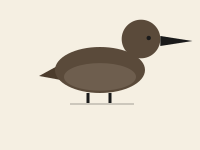
Canada Goose
Branta canadensis
加拿大黑雁
- Scientific name
- Branta canadensis
- Order
- Anseriformes
- Family
- Anatidae
- Length
- 75–110 cm
- Wingspan
- 127–185 cm
- Habitat
- lakes, reservoirs, riverside meadows, city parks, farmland
- Range
- native to North America; widely introduced in Europe, New Zealand and beyond
- Diet
- grasses, grain, berries, aquatic plants
Identification
A large goose with a black head and neck, a bold white chinstrap running from cheek to cheek, and a brown-grey body with pale barring across the back; the white rump patch and black tail stand out in flight. The subspecies differ greatly in size, from small northern forms to giants of the prairies, and overall tone ranges from pale to dark brown.
Canada Geese graze on grass, grain and berries on land far more than they dabble in water, and they have taken enthusiastically to lawns, golf courses and city parks. Family groups stay together through the winter, the V-formations of migrating flocks are a familiar sight in spring and autumn, and the two-syllable honk carries a long way. Nests are built near water early in the season, and adults moult their flight feathers while the goslings are still small, briefly losing the ability to fly.
Resident populations mean they can be seen year-round across much of North America and Europe, especially at reservoirs, gravel pits and riverside meadows. Early morning is most productive: flocks fly out to feed in the fields and return to water at dusk. Check the legs on any close bird — a colour ring is worth reporting to your local ringing scheme.
Voice
a loud two-syllable honk, often repeated in flight