No. 047
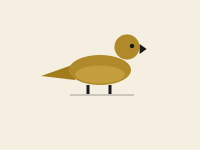
European Goldfinch
Carduelis carduelis
红额金翅雀
- Scientific name
- Carduelis carduelis
- Order
- Passeriformes
- Family
- Fringillidae
- Length
- 12–13 cm
- Wingspan
- 21–25 cm
- Habitat
- waste ground, weedy fields, roadside verges, orchards, gardens
- Range
- Europe, North Africa and western Asia; introduced in Australia and South America
- Diet
- seeds of teasel, thistle and knapweed; occasionally insects
Identification
The European Goldfinch is one of the most colourful small birds in Europe and almost impossible to confuse: a blood-red face mask, a black-and-white head, a warm tawny-brown back and breast, and black wings crossed by a broad, brilliant yellow bar. The bill is pale, slender and sharply pointed, an adaptation for prising seeds out of tight heads, and the bounding, undulating flight with flashes of yellow and white is a strong clue. Juveniles lack the red face, but the wing pattern still gives them away.
Goldfinches specialise in small seeds other finches struggle to reach — teasel, thistle, knapweed, burdock and dandelion — taken while the bird clings acrobatically to a swaying stem or works a seed head from above, often hanging almost upside-down. Flocks chatter constantly with a liquid twittering 'tickelitt' as they move between weed patches. Unusually for a small bird they breed late, mostly July and August, when seed heads are ripe and down is available to line the nest, raising one or two broods.
The classic spot is any patch of rough ground, waste land, set-aside or roadside verge with thistles and teasel standing into autumn and winter; walk the edge and listen for the twittering flock before you see it. In gardens, a nyjer feeder or sunflower hearts will bring them down, and they are often among the last birds to leave a feeder at dusk.
Voice
a liquid, twittering 'tickelitt' given constantly in flocks