No. 026
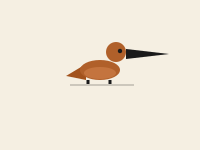
Rufous Hummingbird
Selasphorus rufus
棕煌蜂鸟
- Scientific name
- Selasphorus rufus
- Order
- Apodiformes
- Family
- Trochilidae
- Length
- 7–9 cm
- Wingspan
- 11 cm
- Habitat
- mountain meadows, forest clearings, gardens, flowering scrub
- Range
- breeds from southeast Alaska to the western United States, winters in central Mexico
- Diet
- nectar, small insects and spiders
Identification
The adult male is almost entirely rufous. Crown, back, rump, flanks and tail are a saturated copper-orange with no green anywhere, and the throat carries an orange-red gorget that flares when he faces the light. That total absence of green is the cleanest way to separate him from a male Allen's Hummingbird, which keeps a green back. Females and immatures are green above but show warm rufous along the flanks and at the base of the tail, a hint of colour at the centre of the throat, and white tips to the outer tail feathers; a pale line behind the eye is a useful confirmation. Immature males are the real trap — patchy, with green still on the back and rufous coming in unevenly across the tail.
Measured against body size, this is one of the longest migrations of any bird on earth: some individuals travel from southeast Alaska to central Mexico, up to 6,000 km each way. Spring birds move north along the Pacific coast; autumn birds return through the Rocky Mountains, so the round trip traces a clockwise loop rather than the same line twice. The species is famously aggressive, chasing off hummingbirds, butterflies and even small hawks from a feeder, and its wings make a hard trilling whistle in flight. Males do little of the breeding work and are mostly gone from the nesting grounds by July, leaving the females to build, incubate and feed the young alone.
In the Pacific Northwest the window is the spring bloom, roughly March to May, when red-flowering currant, madrone and salmonberry open and males work north along the flower line. A feeder with 1:4 sugar water will pull them in, though expect the resident hummingbirds to lose their turn at it. In autumn, head for mountain meadows in the interior, where migrants concentrate on late wildflowers before the push south.
Voice
a chattering series of chips; wings trill in flight and in display