No. 048
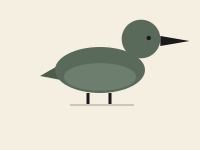
Eurasian Teal
Anas crecca
绿翅鸭
- Scientific name
- Anas crecca
- Order
- Anseriformes
- Family
- Anatidae
- Length
- 34–38 cm
- Wingspan
- 53–59 cm
- Habitat
- shallow muddy pools, reedbed edges, marshes, coastal lagoons
- Range
- breeds across the Palearctic; winters south to North Africa, South and East Asia
- Diet
- seeds, insect larvae, small crustaceans
Identification
The Eurasian Teal is the smallest duck in Europe, and the drake packs an extraordinary amount of colour into that small body: a chestnut head with a broad green patch sweeping back from the eye, a thin white horizontal line along the shoulder, a finely vermiculated grey body and a buff-yellow rear patch bordered in black. The female is a small mottled brown bird, best separated from other female dabblers by her tiny size, short neck and dark bill.
Teal are fast, agile flyers that twist in tight flocks over the marsh, feeding in shallow muddy pools by dabbling rather than diving, mostly on seeds, insect larvae and small crustaceans. They are wary and tend to sit tight in marginal vegetation, bursting out at close range. The male's call is a clear, ringing whistle, often given twice; the female's quack is higher and more clipped than a Mallard's.
Autumn and winter are the best seasons, when resident birds are joined by northern migrants and numbers swell on reservoirs, coastal lagoons and wet grassland. Look along the edges of reedbeds and on flooded pasture, and listen for the whistled call before you see the birds. In flight the green wing patch, or speculum, flashes on both sexes — and it is where the name comes from.
Voice
male a clear ringing whistle; female a higher, shorter quack than a Mallard's