No. 044
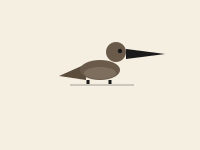
Giant Hummingbird
Patagona gigas
巨蜂鸟
- Scientific name
- Patagona gigas
- Order
- Apodiformes
- Family
- Trochilidae
- Length
- 19–21 cm
- Wingspan
- 20–22 cm
- Habitat
- arid Andean slopes, cactus and agave scrub, highland gardens
- Range
- Andes from southern Colombia to central Chile and Argentina
- Diet
- nectar from large flowers, small insects
Identification
At 19–21 cm the Giant Hummingbird is the largest member of the family — roughly the size of a swallow — and it flies like one. The wingbeats are slow and deep, only about ten to twelve per second, with long glides between them, so a bird crossing a valley is easily dismissed as a martin until it stops dead in the air. The plumage is plain by hummingbird standards: greyish brown above, a prominent white patch on the rump, pale underparts heavily streaked and barred with brown, a long and slightly upturned bill, and white outer tail feathers that spread wide in flight.
The size changes the economics of feeding. At 18–24 g the bird cannot afford to hover endlessly, so it spends far more time perched, feeding from a branch or making short hovering sallies, and it works the big flowers that smaller hummingbirds cannot handle — Puya, agave and columnar cactus. Insects are taken on the wing. Northern populations in Ecuador and Peru are largely resident; the larger southern birds of Chile and Argentina migrate, moving north out of the high Andes for the austral winter.
The arid Andean slopes are the place to look, especially where columnar cacti, agave and Puya are flowering; gardens around Quito and in central Chile also hold birds year-round. It is unusually approachable and habitually perches in the open on wires, fence posts and dead branches, so genuinely close views are the norm rather than the exception. Feeding is busiest in the cool early morning; by mid-afternoon, when the wind gets up, birds go quiet and sit tight.
Voice
a loud, dry, chattering series of notes