No. 028
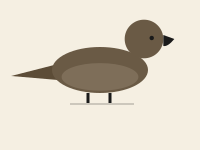
Osprey
Pandion haliaetus
鹗
- Scientific name
- Pandion haliaetus
- Order
- Accipitriformes
- Family
- Pandionidae
- Length
- 50–66 cm
- Wingspan
- 127–180 cm
- Habitat
- lakes, rivers, estuaries, coastal bays
- Range
- cosmopolitan, breeding on every continent except Antarctica
- Diet
- fish, almost exclusively
Identification
A long-winged, gull-like raptor that holds its wings with a distinct kink at the wrist, giving a soaring bird a shallow M silhouette. From below it is white with dark wrist patches and bold barring on the flight feathers and tail; from above, dark brown with a white crown and nape. The head is white with a broad dark stripe through the eye and another down the side of the neck, and the underwing coverts are white, a combination no other large raptor shares.
The anatomy is built around one job. The outer toe is reversible, the toe pads are covered in spiny scales, and the nostrils can be closed — all adaptations for seizing slippery fish. The bird hovers, then plunges feet-first, often fully submerging, and hauls out a fish held head-forward for aerodynamics. It is a long-distance migrant, with European birds wintering in West Africa and North American birds reaching South America, and pairs return to the same platform, dead tree or pole year after year, sometimes reusing a nest for a decade. The call is a sequence of sharp, upslurred chewk whistles, given freely around the nest.
Because it needs clear shallow water and an exposed nest site, it is one of the easiest large raptors to watch deliberately: scan lakes, reservoirs, gravel pits and coastal bays, especially during spring and fall passage. A bird circling over open water, hovering briefly and then dropping, is an Osprey until proven otherwise.
Voice
a series of sharp, whistled chewk notes