No. 025
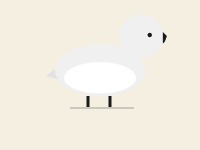
Snowy Owl
Bubo scandiacus
雪鸮
- Scientific name
- Bubo scandiacus
- Order
- Strigiformes
- Family
- Strigidae
- Length
- 52–71 cm
- Wingspan
- 125–150 cm
- Habitat
- Arctic tundra, coastal fields and open farmland in winter
- Range
- circumpolar Arctic; wanders south in irruption years
- Diet
- lemmings, voles, ptarmigan, ducks and other birds
Identification
The Snowy Owl is unmistakable in shape before colour even matters: a heavy, round-headed owl with yellow eyes, no ear tufts and feet buried in white feather, an adaptation to standing on snow and frozen ground. Adult males are nearly pure white with at most a few dark flecks; females and young birds are barred and spotted with dark brown across the back, wings and chest, and the amount of marking varies from bird to bird. Nothing else in its range is this large and this pale — a sitting female can look like a snow-covered rock until she blinks.
Unlike most owls it hunts by day, especially through the continuous daylight of an Arctic summer, and its diet is dominated by lemmings; a single family may take well over a thousand in a year. When lemming numbers crash, Snowy Owls leave the tundra and move south in numbers, which is why birds turn up on coastal fields, moorland and airport grassland far outside the breeding range. It hunts from a low perch or a brief hover, and takes prey as large as ptarmigan and ducks. The male's advertising call is a deep, hollow 'hoo-hoo', given in a slow, rhythmic series.
In the Arctic, scan fence posts, boulders and hummocks from a vehicle — perched birds sit up prominently. In winter irruption years, search flat, open farmland and coastal grazing marsh, and check the ground rather than the sky: Snowy Owls often sit directly on the soil, where a white bird against dark plough is easiest to pick up. Birds that have flown far south are often exhausted; keep your distance and let them rest.
Voice
a deep, hollow, rhythmic 'hoo-hoo'