No. 054
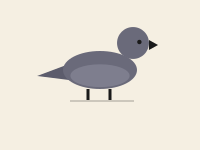
Stock Dove
Columba oenas
欧鸽
- Scientific name
- Columba oenas
- Order
- Columbiformes
- Family
- Columbidae
- Length
- 32–34 cm
- Wingspan
- 63–69 cm
- Habitat
- mature woodland, parkland, farmland, cliffs
- Range
- Europe and western Asia; largely resident
- Diet
- seeds of weeds and grasses, grain, buds
Identification
The Stock Dove looks like a Rock Dove that has been quietly stripped of its best features. It is blue-grey with a faint green gloss on the neck and a pinkish breast, but it has no white rump patch and only the faintest suggestion of wing bars, with just the black tips to the flight feathers standing out. Set beside a Wood Pigeon it is obviously plain — no white neck patch, no white wing bar — and smaller and darker-eyed, which is usually enough to settle the identification once both are in view.
This is the woodland dove of the group, and its nesting habit is the giveaway: it is a cavity breeder, using holes in old broadleaved trees, nest boxes, ruined buildings and cliff crevices rather than building a platform in the open. It feeds on the ground on the seeds of weeds and grasses, moving out into stubble and newly sown fields in winter in small, loose flocks that often mix with Wood Pigeons and feral pigeons. The song is a deep, drawn-out moan, lower and softer than a Wood Pigeon's and easy to mistake for a distant cow. Pairs raise two or three broods between April and September.
Mature woodland, parkland with veteran trees, farmland hedgerows and, in a few places, coastal cliffs are the places to look. The most reliable tactic is to find a likely tree hole and wait for the low moaning coo, which carries well and is the species' best advertisement. Numbers peak in England, but the bird is scarce or declining in various parts of its range, so a confirmed sighting is worth logging.
Voice
a low, moaning 'oo-OO-oo'