No. 018
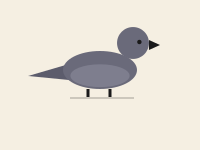
Common Wood Pigeon
Columba palumbus
斑尾林鸽
- Scientific name
- Columba palumbus
- Order
- Columbiformes
- Family
- Columbidae
- Length
- 38–44 cm
- Wingspan
- 71–80 cm
- Habitat
- farmland, parkland, woodland edge, gardens
- Range
- Europe and North Africa; introduced in New Zealand
- Diet
- crops, clover, ivy berries, brassica leaves, grain
Identification
The Common Wood Pigeon is the heavyweight of European doves — a bulky, small-headed bird that can weigh more than half a kilogram and looks twice the size of a Collared Dove beside it. Adults are blue-grey overall with a soft pinkish wash on the breast, a yellowish bill tipped with red, and two unmistakable white marks: a bold patch on each side of the neck and a broad white bar across the wing that is most obvious when the bird is in flight. Juveniles lack both white features entirely and can briefly puzzle an observer.
This is a committed vegetarian of farmland, eating clover, grain, brassica leaves and — in winter — great quantities of ivy berries. Flocks drop into stubble and newly sown fields in the tens or hundreds and can do real damage to crops, which is why the species is shot as a pest in parts of its range. Take-off is loud: the wings clatter audibly as the bird bursts upward, a useful alarm cue even when the bird itself is hidden. The song is the classic five-note phrase, stressed on the second syllable and usually written as 'coo-COO-coo, coo-coo'. Nests are notoriously flimsy twig platforms, often in a hedgerow or conifer, and pairs raise two or three broods a year.
Wood Pigeons are resident and abundant across Britain and much of Europe, so they are easy at any time of year — gardens, parks, hedgerows, woodland rides and roadside wires all work. Winter is when they are most conspicuous, gathering in big flocks on harvested fields and in the tops of bare trees. Listen for the wing clatter and the five-note coo, and check any large grey pigeon for the neck patch before assuming you have something rarer.
Voice
a five-note, rhythmic 'coo-COO-coo, coo-coo'