No. 027
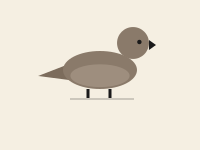
Mourning Dove
Zenaida macroura
哀鸽
- Scientific name
- Zenaida macroura
- Order
- Columbiformes
- Family
- Columbidae
- Length
- 22–34 cm
- Wingspan
- 37–45 cm
- Habitat
- open woodland, farmland, roadsides, suburbs
- Range
- North America; resident to southern Mexico
- Diet
- seeds (over 90% of the diet), some grain
Identification
The Mourning Dove is a slim, small-headed bird whose most defining feature is a long, sharply pointed tail that tapers like a wedge and shows white edges to the outer feathers when it spreads. The wing coverts carry a scatter of black spots, there is a black spot below and behind the eye, and the skin around the dark eye is ringed in pale blue. The breast is a soft, warm buff-pink. Against a Collared Dove, it is warmer, smaller and spotted rather than plain, with a pointed rather than squared tail.
Seeds make up more than ninety percent of the diet, and the bird does most of its feeding on the ground, walking with a characteristic bobbing head. Flight is fast, direct and slightly erratic, and the wings whistle on take-off and landing — a sound that often gives away a bird you never saw. The song is the famous mournful coo that rises then falls away, and males also produce a dry, wheezy wing-clap in display flight. Nests are simple and often placed on a horizontal branch, a ledge or even the ground; the two white eggs are incubated for about two weeks, and a productive pair can raise five or six broods in a season.
Mourning Doves are among the most widespread birds in North America and are easy to find on wires, fence posts, gravel driveways and suburban feeders, where they feed on spilled millet. They are resident over most of their range, though northern birds move south in autumn. Look in the early morning, when they sit in the open to sun themselves and sing from rooftops and utility lines.
Voice
a low, mournful 'coo-OO-oo-oo'