No. 045
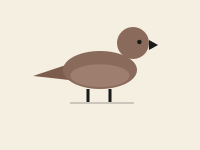
European Turtle Dove
Streptopelia turtur
欧斑鸠
- Scientific name
- Streptopelia turtur
- Order
- Columbiformes
- Family
- Columbidae
- Length
- 26–28 cm
- Wingspan
- 47–53 cm
- Habitat
- farmland hedgerows, scrub, woodland edge
- Range
- Europe and western Asia; winters in the Sahel
- Diet
- seeds of weeds and arable plants, especially fumitory
Identification
The European Turtle Dove is the smallest dove in Europe and the warmest-coloured. Its back is a soft sandy-rufous, and each feather has a dark centre with a pale edge, producing a fine scaly pattern that no other European dove shows. On each side of the neck sits a small patch of black-and-white stripes, the crown is washed blue-grey, the breast carries a pink flush, and the closed tail shows a white tip. It is smaller and far more rufous than a Collared Dove.
The song is a low, even, purring roll — a drowsy 'turrr-turrr' that seems to come from nowhere and is far easier to hear than the bird is to see. Unlike most of its relatives, this is a true summer migrant: it arrives in Europe in April and May and crosses the Sahara in autumn to winter in the Sahel belt. Pairs are monogamous within the season and raise two eggs in a frail nest in a hedge or scrub patch. The diet is overwhelmingly seeds of arable weeds, with fumitory a favourite, and chicks are fed on 'crop milk' like other pigeons.
Look for Turtle Doves in farmland hedgerows, dense scrub and woodland edges across southern and eastern Europe, and listen at first light — the bird usually sings from deep cover and often stays out of sight. The species has collapsed across much of its range, with the British population down by more than ninety percent since the 1970s, driven by agricultural intensification, loss of weed seeds and pressure on its African wintering grounds, so a sighting is now a genuine event.
Voice
a soft, purring 'turrr-turrr' roll